The Science of Immortality: How Far Can Human Longevity Really Go?
Can humans live forever? Discover the science behind immortality, anti-aging research, gene editing, and how far human longevity could extend in the future.

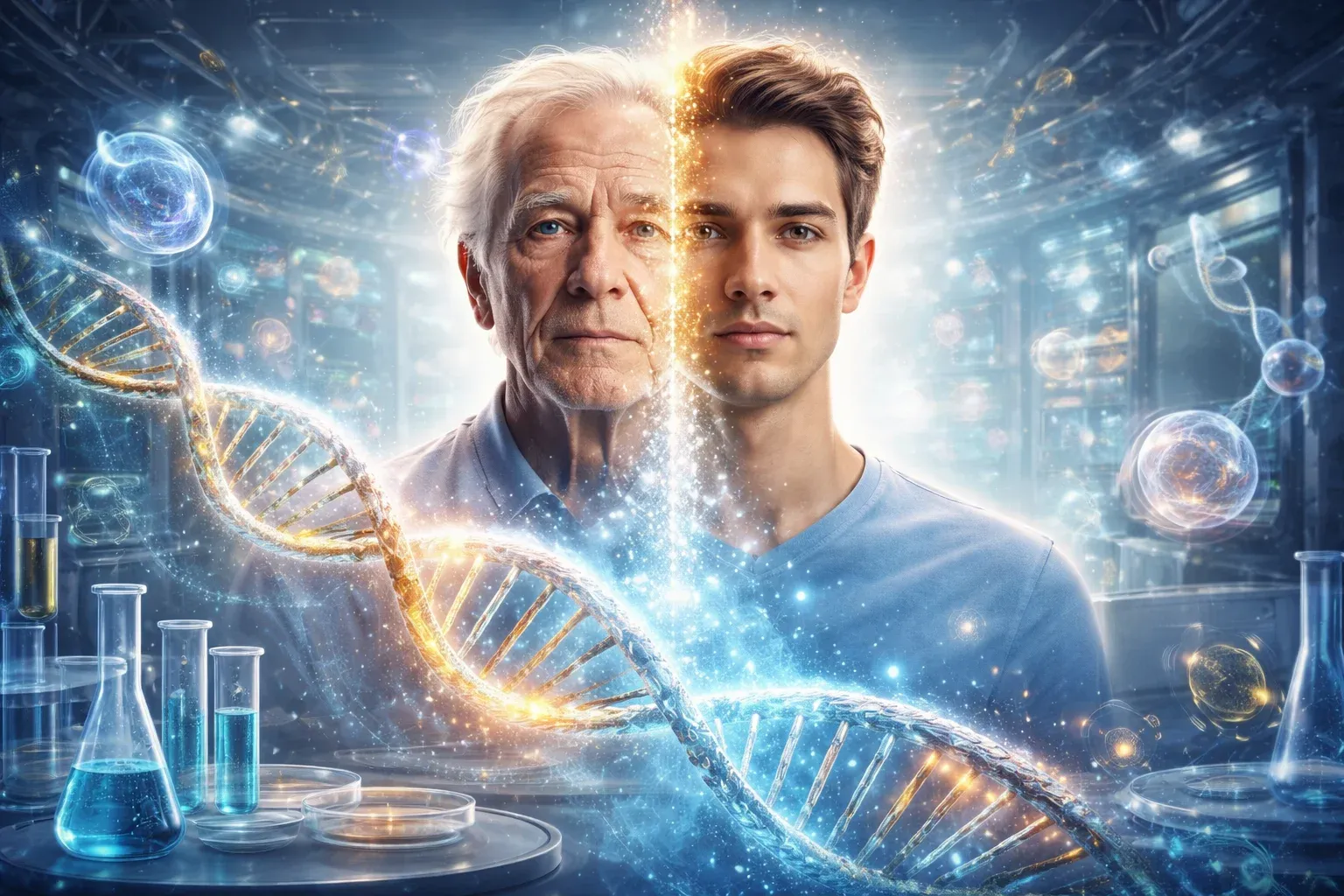
Human Immortality Explained: The Science Behind Living Beyond 120 Years
Let me be straight with you — I've spent a lot of time thinking about aging. Not in a morbid way, but in the same way I think about training or hormonal health: as a system that can be understood, optimized, and — maybe — hacked.
Because here's what's becoming clear: the science of longevity is no longer fringe territory. It's one of the most heavily funded areas of research on the planet. And what researchers are discovering is forcing us to completely rethink what "old age" even means.
So let's get into it.
Humanity's Lifespan Has Already Doubled — And That's Just the Warm-Up
For most of human history, average life expectancy hovered around 30–40 years. That wasn't because people were biologically destined to die young — it's because disease, malnutrition, and infection killed before the body even had a chance to show what it was capable of.
The 19th and 20th centuries changed everything. Vaccines, antibiotics, clean water, and better nutrition sent life expectancy skyrocketing. Today, the global average sits around 73 years, with countries like Japan and Switzerland regularly exceeding 85 years.
The longest confirmed human lifespan belongs to Frenchwoman Jeanne Calment, who died in 1997 at 122 years and 164 days. For decades, that number felt like a hard ceiling.
But the science no longer supports that assumption.
What's Actually Causing You to Age?
Aging isn't one thing. It's a cascade of biological failures happening simultaneously at the cellular level. Understanding this is important, because if aging has multiple causes, it may also have multiple interventions.
The key mechanisms researchers have identified include DNA damage (your cells accumulate genetic errors from radiation, toxins, and normal metabolic activity over time), telomere shortening (the protective caps on your chromosomes get shorter with each cell division — I actually wrote a deep dive on how telomere length is affected by strength training that's worth reading), cellular senescence (old cells stop dividing but don't die, instead leaking inflammatory signals that damage surrounding tissue), and mitochondrial dysfunction (your cell's energy factories start failing, slowing metabolism and accelerating disease).
These aren't abstract concepts. They're the reason your recovery slows down after 35, why testosterone begins declining, and why cortisol starts winning the hormonal tug-of-war as you age.
The good news? Science is now targeting each of these mechanisms directly.
The Real Science Being Done Right Now
Gene Editing and CRISPR
CRISPR technology allows scientists to edit DNA with a precision that was unthinkable even a decade ago. In aging research, the goal is to correct mutations, repair cellular damage, and potentially slow the biological clock itself. Some research teams are exploring whether gene therapy could add decades of healthy function to the human lifespan.
Cellular Reprogramming
In 2006, Japanese scientist Shinya Yamanaka made a discovery that won him the Nobel Prize: adult cells can be biochemically "reset" to a more youthful state using a specific set of genetic factors (now called Yamanaka factors). In animal studies, partial cellular reprogramming has already reversed measurable aging markers. The challenge now is making this safe and scalable for humans.
Senolytic Drugs
One of the most promising near-term interventions targets senescent cells — the "zombie cells" that accumulate with age and release inflammatory compounds linked to arthritis, Alzheimer's, cardiovascular disease, and metabolic dysfunction. Senolytic therapies are designed to selectively destroy these cells. In mice, clearing senescent cells has meaningfully extended lifespan and improved physical function. Human trials are underway.
A 2023 study published in Nature Aging found that senolytic treatment in older adults reduced markers of systemic inflammation and improved physical performance metrics — early but genuinely exciting data.
Lab-Grown and Bioengineered Organs
If the major organs can be replaced when they fail — kidneys, livers, heart tissue — the biological calculus of aging changes dramatically. Regenerative medicine is advancing fast, with 3D-printed tissues and stem-cell-derived organs moving from theory toward clinical reality.
AI-Accelerated Discovery
Artificial intelligence is compressing decades of research into years. AI systems are identifying drug candidates, mapping the genetic architecture of aging, and predicting molecular interactions inside cells at a speed no human team could match. This is likely to be the multiplier that makes everything else happen faster.
A Personal Note: Why This Matters Beyond the Lab
I'll be honest — I started paying serious attention to longevity science when I began noticing my own recovery taking longer, my sleep quality declining, and my energy patterns shifting. It pushed me to look at everything from insulin resistance and its effect on longevity to how sleep directly affects testosterone and hormonal health.
What I found is that the foundational habits — strength training, anti-inflammatory nutrition, managing stress hormones — are not just about performance. They are longevity interventions. Every time you build muscle, you're protecting against sarcopenia. Every time you reduce chronic inflammation, you're slowing the senescence cascade. The biology isn't separate — it's the same system.
Longevity science doesn't start in a lab. It starts with the daily decisions you're already making, or failing to make.
Is There a Hard Limit on Human Lifespan?
Scientists are genuinely divided on this.
One camp argues biology imposes a ceiling around 120–130 years — the point at which accumulated cellular damage simply cannot be repaired fast enough. The other camp, led by researchers like Aubrey de Grey and David Sinclair, argues that aging is fundamentally a treatable medical condition, and that with sufficient technological intervention, the concept of a "natural" lifespan could become obsolete.
What's notable is that this debate is no longer purely theoretical. It's happening in the context of real clinical trials, real funding, and real data.
What Realistic Longevity Looks Like This Century
Most researchers aren't talking about immortality — they're talking about something more immediately meaningful: a dramatic expansion of healthspan, the years you spend healthy and functional rather than simply alive.
Realistic milestones within this century likely include average lifespans reaching 100+ years, medical treatments that slow biological aging itself, gene therapies that repair cumulative cellular damage, and replacement organs grown from a patient's own cells. If you're already investing in the right supplements for hormonal longevity and building foundational habits now, you may be in the first generation that benefits from these technologies before they become mainstream.
Frequently Asked Questions
What is the maximum human lifespan according to science? The longest confirmed human life was 122 years. Most scientists believe the current biological ceiling sits between 120 and 130 years, though some researchers argue that technological intervention could push this significantly higher in the coming decades.
What are the main biological causes of aging? The primary mechanisms include DNA damage, telomere shortening, cellular senescence, and mitochondrial dysfunction. These processes interact and compound each other over time, driving the physical and cognitive decline associated with aging.
Can senolytic drugs actually slow aging in humans? Early human trials are showing promising results. Senolytics — drugs that eliminate senescent "zombie cells" — have reduced inflammatory markers and improved physical function in older adults. They're not yet an approved anti-aging therapy, but the research trajectory is genuinely encouraging.
How does testosterone relate to aging and longevity? Testosterone plays a significant role in muscle preservation, metabolic function, and cardiovascular health — all directly tied to longevity. Declining testosterone accelerates the aging process, which is why maintaining hormonal health is increasingly considered a core longevity strategy.
What can I do right now to improve my longevity? The evidence consistently points to the same foundations: resistance training, quality sleep, anti-inflammatory nutrition, stress management, and avoiding metabolic dysfunction like insulin resistance. These aren't alternatives to future medical interventions — they're the baseline that makes everything else work better.


