How to Become a Leader That Everyone Would Want to Go to War With
Learn the traits, mindset, and habits that make people trust you deeply and follow your leadership even in the toughest challenges.

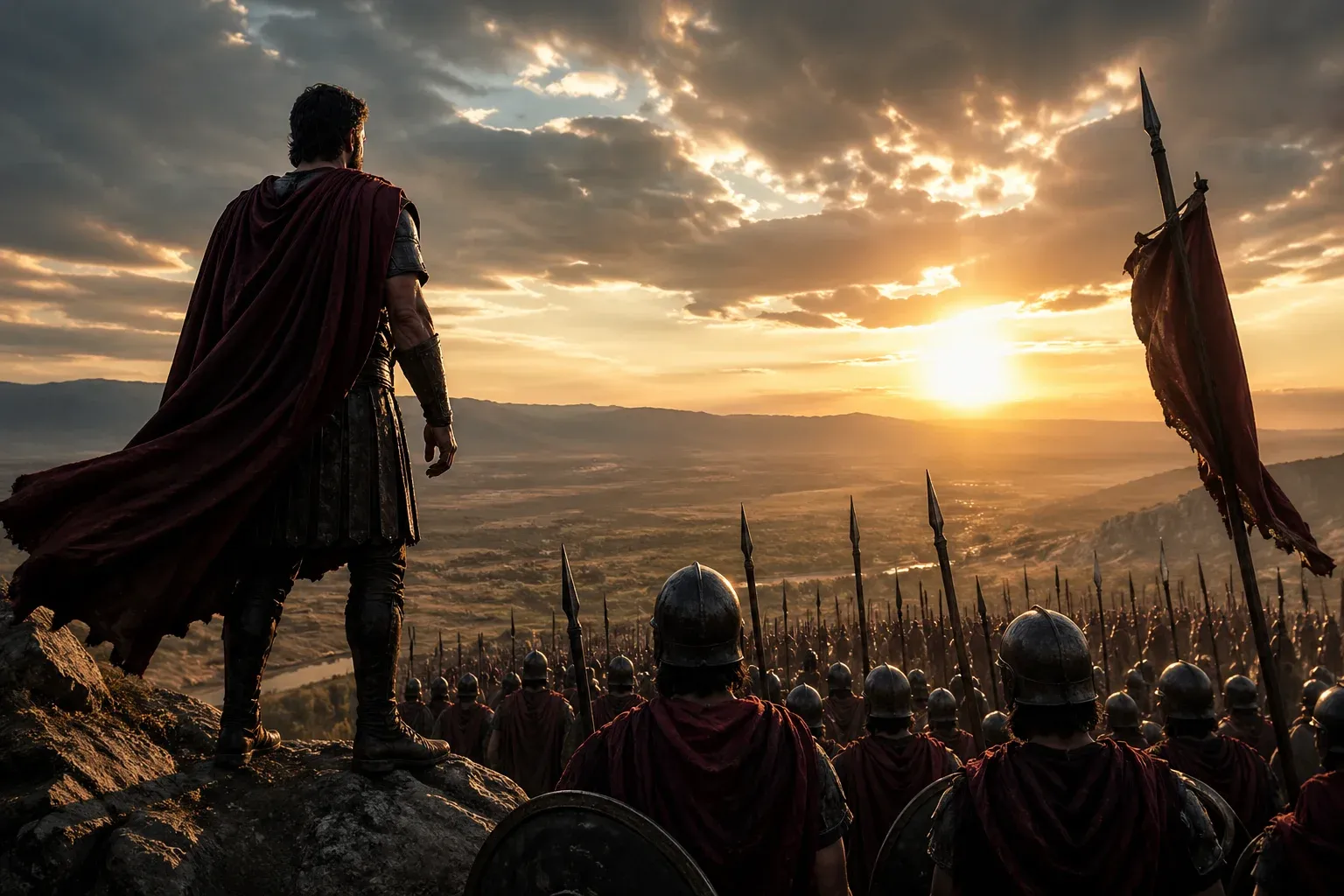
Lead So Well People Would Follow You Into Any Battle
There's a phrase you hear in military circles, locker rooms, and boardrooms alike: "That's someone I'd go to war with."
It's the highest compliment you can pay a man. Not "he's talented" or "he's smart." It means you trust him with your life when the stakes are real and the pressure is crushing.
Most people spend their whole careers chasing titles. A few earn that sentence.
This article breaks down what it actually takes to become a leader people would genuinely follow into the fire — and how you can start building that kind of presence today.
What Does It Really Mean to Be a Leader Worth Following?
It has nothing to do with your position on an org chart.
A leader worth following is someone who makes the people around him feel safer, sharper, and more capable — not because he demands it, but because his presence naturally produces it.
Think about it from the other side. Think about the people in your life you'd genuinely show up for, no questions asked. What do they have in common? They probably kept their word. They showed up when it was hard. They never threw you under the bus.
That's leadership. It's earned behavior, not a job title.
Why Most Men Confuse Authority With Leadership
Authority is given. Leadership is earned.
You can appoint someone a manager, a team captain, or a department head. That gives them authority. But it doesn't make anyone want to fight alongside them.
The leaders people die for — metaphorically speaking — are the ones who demonstrate integrity under pressure. They don't change their character when the stakes go up. They don't become someone else when the lights are on them.
This is one of the core distinctions in the 4 male archetypes — the King archetype specifically isn't about power over others. It's about holding the center, creating order, and providing safety for those in your domain. Real authority flows from inner authority first.
The Foundation: Trust Is Everything
How do you build trust as a leader?
You build it through consistency over time. Simple as that.
Every time you say you'll do something and follow through, you're making a deposit. Every time you dodge accountability, deflect blame, or go back on your word — you're withdrawing. And withdrawals in trust are expensive. They cost three to four times more than the deposits you make.
The leaders people most want to follow share one non-negotiable: their behavior doesn't change based on who's watching.
They hold themselves to the same standard at 11pm on a Friday as they do in a Monday morning meeting. That kind of consistency is rare. And people notice it at a deep, almost subconscious level.
The research backs this up
A landmark study published in the Journal of Applied Psychology found that leader integrity — specifically the alignment between stated values and actual behavior — was among the strongest predictors of follower trust, team commitment, and willingness to exert discretionary effort. In other words, people don't just follow who they respect. They outperform for them.
Strength Without Fear: The Difference That Changes Everything
What's the difference between a leader who inspires and one who just intimidates?
Fear-based leadership works in the short term. People comply, meet quotas, stay in line.
But the moment the pressure drops — the moment the threat is removed — those people leave. Or they stop caring. Or they start undermining you in ways you can't easily see.
The leader people would go to war with doesn't create compliance through fear. He creates commitment through respect.
He holds high standards, yes. He pushes people, yes. But he does it while making them feel seen, capable, and part of something real. The difference in emotional tone is everything.
This connects directly to what's happening in modern masculinity — men are hungry for models of strength that don't collapse into either aggression or passivity. Real leadership sits in that third space: grounded, demanding, and deeply human.
Vulnerability Is Not Weakness — It's Advanced Credibility
Should a leader show vulnerability?
Yes. Strategically and honestly.
There's a version of vulnerability that's performative — designed to seem relatable. People see through that immediately. It reads as manipulation, not authenticity.
Then there's real vulnerability: owning a mistake in front of your team. Saying "I don't know" when you don't know. Acknowledging when a decision you made was wrong and correcting course without defensiveness.
That kind of vulnerability is actually a signal of security. It says: I don't need to pretend to be infallible. I'm confident enough to be honest.
That's the move most men are afraid to make. And it's the move that earns the most loyalty.
My Take: What I've Learned About Leadership the Hard Way
By Marcus Rodrigues
I spent years confusing presence with noise.
I thought being assertive meant being the loudest in the room. I thought leading meant having all the answers. What I actually learned — through work, through relationships, through watching the men I most respect operate — is that the most commanding people I've ever been around said less, moved slower, and held their ground with a kind of quiet certainty that didn't need to announce itself.
The leaders I've genuinely wanted to fight alongside weren't the ones with the most confidence in their voice. They were the ones with the most consistency in their actions.
Real influence isn't about being impressive. It's about being reliable.
That realization changed how I approach everything — how I write, how I run projects, how I show up in my personal relationships. Leadership isn't a skill set you develop for work and leave at the office. It's a character you build daily, or you don't build at all.
Courage Under Pressure: The Real Test
What does real courage look like in leadership?
It's not the dramatic gesture. It's not the inspiring speech before the big moment.
Real leadership courage is the decision made when everyone's watching and no one wants to hear the honest answer. It's choosing the harder right over the easier wrong — consistently, not just once.
It's also courage that stays composed. The leaders people trust most don't panic visibly. They regulate their own emotional state so that the people around them don't have to carry that weight on top of everything else.
Bodybuilding and mental strength share this DNA — the capacity to stay in the discomfort without flinching, to keep executing when every signal is telling you to stop. That psychological muscle applies far beyond the gym.
Empowerment: The Most Underrated Leadership Skill
A leader who hoards all the decisions is a bottleneck, not a leader.
The leaders people most want to follow build other leaders. They delegate real responsibility, not just tasks. They let people own outcomes — including the failures — because that's how growth actually happens.
This isn't idealism. It's strategy.
When your people know you trust them with real stakes, their investment in the outcome changes entirely. They stop executing your vision and start sharing it.
Emotional Intelligence Is the Multiplier
All the vision, integrity, and courage in the world gets amplified or undermined by how well you read and manage the emotional environment around you.
Leaders with high EQ don't just manage conflict — they prevent most of it by staying calibrated to what's actually happening with their people. They notice the quiet tension before it becomes a problem. They have hard conversations early, not late.
They also know when to shut up and listen. Not to respond. Just to understand.
That's rarer than you think.
Resilience: Leadership Is Tested in the Dark
The real character of a leader doesn't show up in the wins. Anyone looks good when things are working.
It shows up in the setbacks. In how you carry yourself when the project fails, when the team is demoralized, when the path forward isn't clear.
People are watching how you respond to adversity far more closely than they're watching your successes. Your composure — or the absence of it — sets the emotional ceiling for everyone around you.
Resilience isn't pretending things are fine. It's staying functional, honest, and forward-focused even when they're not.
If you want to go deeper into what drives men at their best, the archetypes framework is worth your time. Start here: The 4 Male Archetypes: A Complete Guide.
Conclusion
The kind of leader people would follow into battle isn't born — he's built.
He's built through hundreds of small decisions to keep his word, hold his standard, and stay present under pressure. Through the choice to empower instead of control. To be honest instead of impressive.
You don't have to run a company or a military unit to develop this. You can start today, in whatever sphere of influence you already occupy.
The question isn't whether you have the title. It's whether you have the character.
FAQ: Becoming a Leader People Would Go to War With
1. Can leadership be learned, or is it something you're born with?
Leadership is a skill set built on character, and character is developed — not inherited. Certain traits like charisma or natural authority may come more easily to some, but the core components of trustworthy leadership — integrity, accountability, emotional intelligence, and consistency — are all learnable with deliberate practice and self-awareness.
2. What's the single most important quality in a leader people trust?
Consistency. Not talent, not intelligence, not charisma. When your behavior aligns with your stated values across different contexts and levels of pressure, people trust you at a deep level. That alignment is what separates respected leaders from people who just occupy leadership positions.
3. Is there a difference between leadership in professional settings and personal life?
The principles are the same — the contexts differ. Trust, accountability, and emotional presence matter as much in a relationship or a family as they do in a corporate team. In fact, many men find it harder to lead authentically at home than at work, because the emotional stakes are higher and the feedback is more immediate.
4. How does emotional intelligence relate to leadership strength?
EQ doesn't soften leadership — it sharpens it. Leaders with high emotional intelligence make better decisions under pressure because they're not operating blind to what's happening around them. They read the room, manage their own state, and create conditions where others can perform at their best. That's a competitive advantage, not a liability.
5. How do you build resilience as a leader?
Resilience is built through exposure — deliberate encounters with difficulty, pressure, and failure, processed honestly rather than avoided. The leaders with the strongest resilience have usually been tested multiple times and developed a relationship with adversity that doesn't break their composure. Practices like strength training, stoic philosophy, and honest self-reflection all build the psychological foundation that resilience requires.


